FAR, The Fidelity Accessibility Requirements
Pioneering Progressive Accessibility Testing at Fidelity Investments
Impact: Increased accessibility testing completion from 23% to 78% across 50+ product teams, establishing accessibility testing as an official product KPI.
Role: Principal Accessibility Designer/Program Lead | Timeline: 12 months | Team: 2 Accessibility SMEs
View: FAR Introduction | Progressive Checklist
The Challenge
After eliminating dedicated QA, product teams struggled with accessibility testing. They were overwhelmed by lengthy standards, lacked expertise, and couldn’t prioritize. Teams repeatedly asked: “What do I test right now if I can’t test everything?” The result: inaccessible products launching to millions of customers.
My Approach
I interviewed 15 product teams and analyzed defect patterns to understand barriers. Initially, I designed a framework prioritizing the 10 most critical issues—but pilot teams struggled to complete it. Through follow-up research, I discovered the problem: mixing simple and complex tests in Tier 1 created blockers that caused teams to abandon testing entirely.
The Pivot: I restructured the framework around progressive complexity rather than criticality, creating a learning pathway that built skills naturally from automated checks to advanced screen reader testing.
The Solution
A 4-tier progressive testing framework with 60+ checkpoints:
- Tier 1: Basic automated checks (color contrast, alt text)
- Tier 2: Manual interaction testing (keyboard navigation)
- Tier 3: Component-level testing (forms, modals)
- Tier 4: Advanced screen reader testing
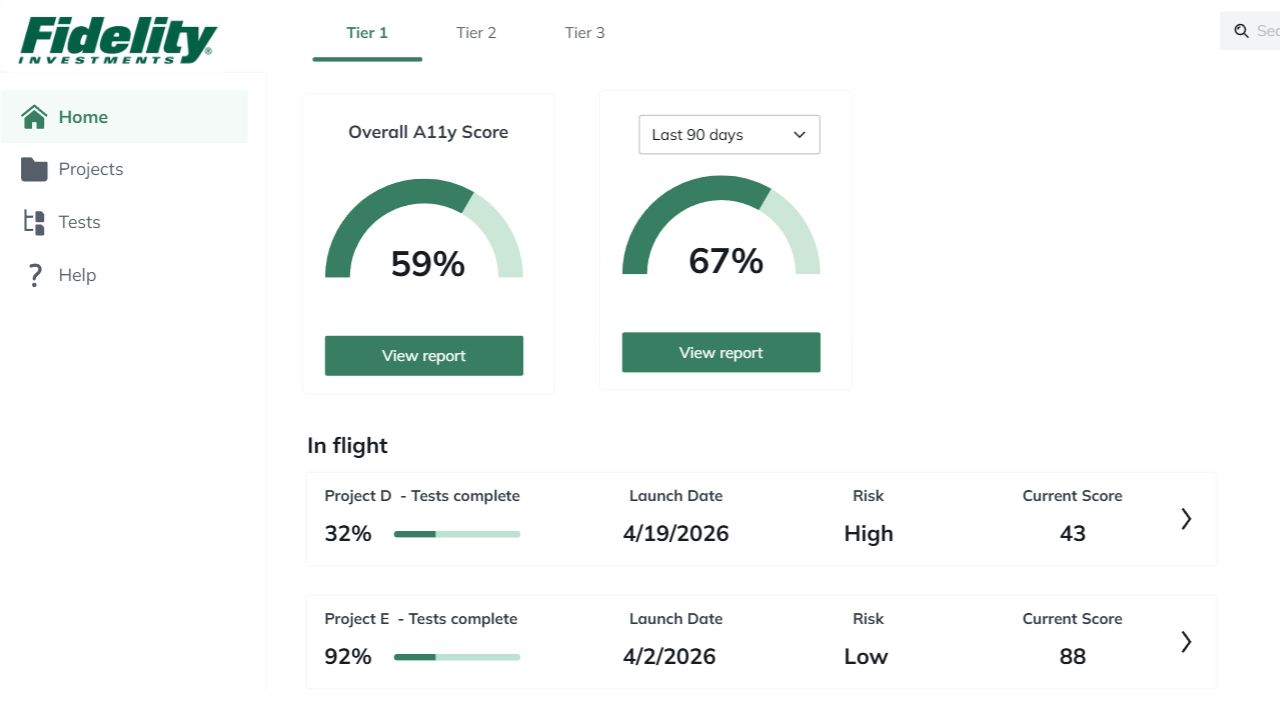
Each tier includes testing instructions, tool recommendations, pass/fail criteria, and links to training resources. Leadership dashboard shows team progress and accessibility scores for organizational visibility.
Impact & Outcomes
- 40% of product teams actively using FAR (up from 10%)
- 85% completed Tier 1 within first quarter
- Overall average defect reduction of 10-15% across quarters
- Established as official KPI in Q3 2023 with executive visibility
- 50+ participants in first year of training sessions
Key Insight
Starting with what mattered most to users with disabilities created a learning barrier that prevented any testing. The counterintuitive pivot to progressive complexity, testing “less important” things first, removed barriers and achieved more comprehensive testing. Meeting teams where they are, not where we wish they’d be, creates sustainable change. Additionally, by adding scores to adopted KPIs, we saw increased engagement and improved outcomes across the board.